There’s a better way for investors to bet on the South African economy, and now might be a smart time to do it. This is, at heart, a story about claiming what’s ours rather than treating it as someone else’s to tell. There’s a version of that idea that belongs in an investment portfolio, and it starts with understanding what your local equity allocation actually owns.
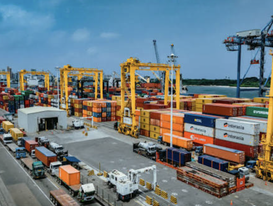
Dar es Salaam Port is handling ships faster while processing record cargo volumes, strengthening Tanzania’s role as an Indian Ocean gateway for trade extending into Central, Eastern and Southern Africa.
Africa’s M&A market found firmer footing in 2026, arresting the recent slide. Through July, deal value involving African targets or acquirers reached $11.6 billion, up 19% from $9.7 billion in the same period of 2025. But deal volume fell 32%, from 294 transactions to 200. The increase in deal value modestly outpaced that of the global market, which was about 19% over the same period even as global deal volume declined by 16%.
As global capital becomes more selective, African governments and institutions are placing greater focus on the financial resources already within the continent.
Africa enters 2026 as governments and businesses reassess how growth will be financed, produced and connected to global markets. The global trading system is undergoing profound change as United States tariff policy evolves and the African Growth and Opportunity Act approaches expiry. At the same time, global capital has become more selective, while advances in cloud computing, artificial intelligence and digital infrastructure are changing the foundations of competitiveness. These shifts are bringing trade, finance and technology into the same strategic conversation: how can Africa turn a changing global order into durable economic progress?
Infrastructure has emerged as one of the most active areas for fund managers operating in Africa as investors seek exposure to long-term assets that can deliver both financial returns and developmental impact. From energy and transport to digital infrastructure and logistics, specialised infrastructure funds are increasingly positioning themselves as the bridge between Africa’s substantial financing needs and growing pools of private capital.
Siloed systems, legacy dashboards, and ongoing governance fears are slowing AI adoption in financial services, but there is a fix for the sector that enables resilient AI modernisation.
Contrary to the narrative that South Africa’s attractiveness as an investment destination has dimmed, the country’s mergers and acquisitions (M&A) performance has turned a corner and is gathering strength.
Africa has huge potential to boost its economic output through regional integration, but fragmented systems and high trade costs hinder regional trade, writes Yinebeb Bahru. Investing in shared digital public infrastructure can enhance cross-border trade and help businesses compete globally. But with less than 40% of Africans online, expanding digital connectivity is crucial for Intra-African trade.
Institutional investors are entering a new era of complexity and opportunity. Retirement funds and pension schemes are under pressure to deliver sustainable returns, manage liquidity, and meet growing demands for responsible investing. In this environment, Exchange Traded Funds (ETFs) have emerged as more than just passive vehicles – they are strategic enablers that bridge the gap between public and private markets.