Africa’s CEOs are entering 2025 with strong confidence in economic recovery, resilience forged through prolonged uncertainty, and a clear focus on protecting their core businesses. According to PwC’s 29th Global CEO Survey, leaders across the continent remain more optimistic than their global peers about economic conditions and near-term revenue growth.
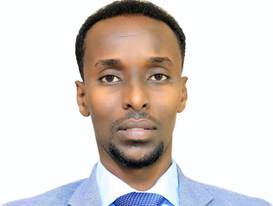
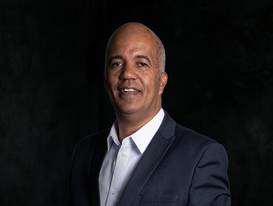
Long powered by private networks, diaspora capital, and an increasingly digital economy, Somalia is now taking a decisive step toward formal public markets with the launch of the National Securities Exchange of Somalia (NSES). In this interview with Africa Global Funds, Yasin M. Ibar, Chief Executive Officer of NSES, outlines how the exchange plans to begin trading in 2026, build investor trust through strong regulation and regional partnerships, and harness Islamic finance, technology, and diaspora participation to create a transparent, liquid frontier market aligned with East Africa and beyond.
Morocco’s private equity market has quietly transformed over the past decade from a niche corner of the financial system into a magnet for domestic and international capital. Relative macroeconomic stability, predictable policy, and a growing pool of mid-sized companies have positioned the kingdom as North Africa’s leading private capital hub. Unlike some regional peers, which continue to face political uncertainty or currency volatility, Morocco offers governance, legal frameworks, and financial infrastructure that reassure institutional investors.
Across Africa, governments are spending over $100bn annually on external debt service — often exceeding national budgets for health or education. As debt burdens rise, fiscal space is shrinking at the exact moment when investment in climate resilience, clean energy, and sustainable development is most urgent. Strengthening domestic debt markets and embedding sustainability into debt strategies can create a virtuous cycle: easing short-term repayment pressures while unlocking long-term, affordable capital for national priorities.
Africa stands on the threshold of a historic economic expansion. A powerful combination of youthful demographics, rapid urbanization, the rise of a confident middle class, and steady improvements in business environments has positioned the continent as one of the most compelling investment destinations of the 21st century.
As Africa undergoes a dramatic transformation in its financing landscape, global banks and investors are taking a renewed interest in the continent’s evolving capital markets. A recent report by Crisil Coalition Greenwich projects that Africa’s global markets financing revenues will reach $1.4bn by 2025, growing at a CAGR of 9%—a reflection of the region’s accelerating shift from traditional Eurobond issuance to more sophisticated instruments like Total Return Swaps (TRS), syndicated loans, and structured derivatives.
South Africa’s financial markets are undergoing a profound structural transformation that will reshape the landscape for banks, corporates, and particularly asset managers. The long-standing Johannesburg Interbank Average Rate (JIBAR), which has been the dominant interest rate benchmark for floating-rate instruments in the country, is being phased out. In its place, the South African Reserve Bank (SARB) is ushering in the South African Rand Overnight Index Average (ZARONIA)—a near risk-free rate (NRFR) designed to reflect real market transactions and enhance financial stability.
Creation Capital was founded in 2017 to provide sustainable funding solutions to the underbanked middle corporate market. The asset manager is a majority black-owned with a 7-year track record. Since inception, Creation Capital has sustained more than 3,400 jobs while delivering attractive, uncorrelated returns to clients. Africa Global Funds’s Anna Lyudvig spoke with Kasief Isaacs, a recently appointed Chief Executive Officer, about the firm, his vision and opportunities and challenges in private credit markets.
British International Investment (BII), the UK’s development finance institution (DFI) and impact investor, has recently acted as an anchor investor in the new Summit’s Private Equity Fund II. Africa Global Funds’ Anna Lyudvig spoke with Sara Taylor, Head of Private Equity Funds and Co-Investments, British International Investment, to learn more about investing in PE funds and emerging trends that are shaping how DFIs invest in private equity in Africa.
Africa stands at a pivotal moment in its economic journey. With a young, rapidly growing population, abundant natural resources, and accelerating digital transformation, the continent holds immense promise. However, unlocking this potential requires a fundamental shift in how capital is mobilized and deployed.
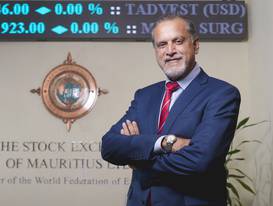
The Stock Exchange of Mauritius (SEM) commenced operations in July 1989 as a domestic equity-focused exchange. In 2010, SEM undertook a transformative shift by internationalizing its operational and regulatory frameworks. Today, SEM is a dynamic exchange hosting 180+ securities across diverse asset classes, including equities, debt products, ETFs, ETNs, depository receipts, and structured products. In November 2024, SEM launched SEMX, a dedicated segment with specific listing rules to cater for the needs of high-growth companies. Africa Global Funds’s Anna Lyudvig spoke with Sunil Benimadhu, Chief Executive of the Stock Exchange of Mauritius, to learn more about the new segment, other initiatives at the Exchange and digital transformation.
Anyone who has been involved in financing, owning, operating, or working at businesses in Africa has surely seen both the immense potential and profound challenges that lie within the continent.